The Earth, a celestial sphere in constant flux, presents a tapestry of interconnected systems, each intricately woven to create the dynamic planet we inhabit. From the fiery heart of its core to the wispy tendrils of its atmosphere, a ceaseless churn of energy and matter shapes landscapes, drives weather patterns, and sustains life. Unraveling the mysteries of these dynamic processes is not merely an academic pursuit; it is fundamental to understanding our past, navigating our present, and securing our future. This exploration delves into the profound forces at play, offering a glimpse into the planet’s energetic ballet.
The Earth’s interior is a realm of extreme heat and pressure, a potent engine driving many of its surface phenomena. The core, a molten ball of iron and nickel, generates intense heat through radioactive decay and residual heat from planetary formation. This heat is then transferred outwards through the planet’s mantle, setting in motion the grandest conveyor belt of all: mantle convection.
Mantle Convection: The Slow Dance of Rock
The mantle, a thick layer of silicate rock, is not solid in the way we perceive everyday rock. Over geological timescales, it behaves like a highly viscous fluid. Driven by the heat from the core, hotter, less dense material rises from deep within the Earth, while cooler, denser material sinks. This slow, colossal circulation, measured in centimeters per year, is the primary engine powering plate tectonics, the very foundation of Earth’s outer shell. Imagine a pot of thick stew simmering on a stove; the heat at the bottom causes the contents to rise, spread out, and then sink, creating a continuous circulation. This is, in essence, what happens within Earth’s mantle, albeit on a scale of unimaginable magnitude.
The Driving Force Behind Plate Tectonics
Mantle convection directly manipulates the lithosphere, the rigid outer shell of the Earth. This shell is broken into large, irregularly shaped pieces called tectonic plates. Where the upwelling currents in the mantle reach the underside of the lithosphere, they exert a pulling force, causing the plates to move apart. Conversely, where cooler material sinks, it drags the overlying plates along. This relentless movement is responsible for the formation of mountains, the opening of ocean basins, and the widespread occurrence of earthquakes and volcanic activity. The plates are not static entities; they are constantly jostling, colliding, and grinding against each other on the surface of this vast, simmering planet.
The Role of Ridge Push and Slab Pull
While mantle convection is the primary driver, two additional forces contribute significantly to plate motion. “Ridge push” occurs at mid-ocean ridges, where new, hot oceanic crust is generated. This newly formed crust is higher than the surrounding seafloor, and gravity causes it to slide downhill away from the ridge crest, pushing the plates apart. “Slab pull,” on the other hand, is a much more powerful force that occurs at subduction zones. Here, dense oceanic lithosphere sinks back into the mantle. As this dense slab descends, it pulls the rest of the plate along with it, acting like an anchor dragging a ship. The combined effect of these forces orchestrates the grand, slow ballet of the Earth’s lithospheric plates.
Earth science encompasses a wide range of topics, including geology, meteorology, oceanography, and environmental science. For those interested in exploring these elements further, a related article can be found at Freaky Science, which delves into various scientific phenomena and discoveries that shape our understanding of the Earth and its processes. This resource provides engaging insights and information that can enhance your knowledge of the natural world.
Shaping the Surface: The Forces of Tectonics
The movement of tectonic plates, fueled by the Earth’s internal heat, is the architect of our planet’s surface. This vast geological sculpting process has been at play for billions of years, creating the dramatic landscapes we see today and continuously modifying them.
Plate Boundaries: The Epicenters of Change
The interaction of tectonic plates occurs at their boundaries, the sites where the most intense geological activity takes place. These boundaries are not just lines on a map; they are dynamic zones of creation and destruction, where continents are born and mountains rise.
Divergent Boundaries: The Birthplaces of New Crust
At divergent boundaries, plates move apart. This often occurs beneath the oceans, where magma from the mantle rises to fill the gap, creating new oceanic crust. This process, known as seafloor spreading, is responsible for the formation of mid-ocean ridges, such as the Mid-Atlantic Ridge. Think of a conveyor belt continuously bringing fresh material to the surface, widening the gap and pushing the existing material outwards. These are the Earth’s natural factories for creating new lithosphere.
Convergent Boundaries: The Collisions that Sculpt
When plates collide, the consequences are dramatic. The outcome depends on the types of plates involved. If two continental plates collide, neither can easily subduct, leading to immense crumpling and folding of the crust, forming towering mountain ranges like the Himalayas. When an oceanic plate collides with a continental plate, the denser oceanic plate is forced beneath the continental plate in a process called subduction. This creates deep ocean trenches offshore and volcanic mountain ranges on the continent, such as the Andes. Finally, when two oceanic plates collide, one subducts beneath the other, forming deep-sea trenches and volcanic island arcs, like Japan.
Transform Boundaries: The Grinding Grind of Plates
At transform boundaries, plates slide past each other horizontally. These boundaries are characterized by extensive fault systems, which can generate significant earthquakes as the rocks accumulate stress and then suddenly release it. The San Andreas Fault in California is a prime example of a transform boundary where the Pacific Plate is sliding northwestward past the North American Plate. It’s akin to two immense rough surfaces rubbing against each other; the friction builds, and occasionally, a sudden jolt releases the accumulated energy.
Volcanism: The Earth’s Fiery Exhalations
Volcanoes are direct manifestations of the Earth’s internal heat escaping to the surface. They are formed when molten rock, known as magma, rises from the mantle and erupts onto the surface as lava. This geological process is intrinsically linked to plate tectonics.
Intraplate Volcanism: Hotspots Underneath
While most volcanism occurs at plate boundaries, some volcanoes form in the middle of tectonic plates. These are often attributed to “hotspots,” plumes of exceptionally hot mantle material that rise from deep within the Earth. As a tectonic plate moves over a stationary hotspot, a chain of volcanoes can be formed, with the oldest volcanoes being furthest from the hotspot. The Hawaiian Islands are a classic example of this phenomenon.
Subduction Zone Volcanism: Ring of Fire’s Fury
The Pacific Ring of Fire, a horseshoe-shaped zone of intense seismic and volcanic activity, is a prime example of volcanism associated with subduction zones. As oceanic plates subduct beneath continental plates or other oceanic plates, the descending slab releases water and volatile chemicals, which lowers the melting point of the overlying mantle. This molten material then rises to the surface, forming volcanoes.
Earthquakes: The Shaking of the Ground
Earthquakes are sudden releases of energy in the Earth’s crust that create seismic waves. They are most commonly caused by the movement of tectonic plates along faults. The friction between the plates as they try to move past each other builds up stress. When this stress exceeds the strength of the rocks, they fracture, and the energy is released as seismic waves that travel through the Earth, causing the ground to shake.
The Atmosphere’s Breath: The Dynamics of Weather and Climate
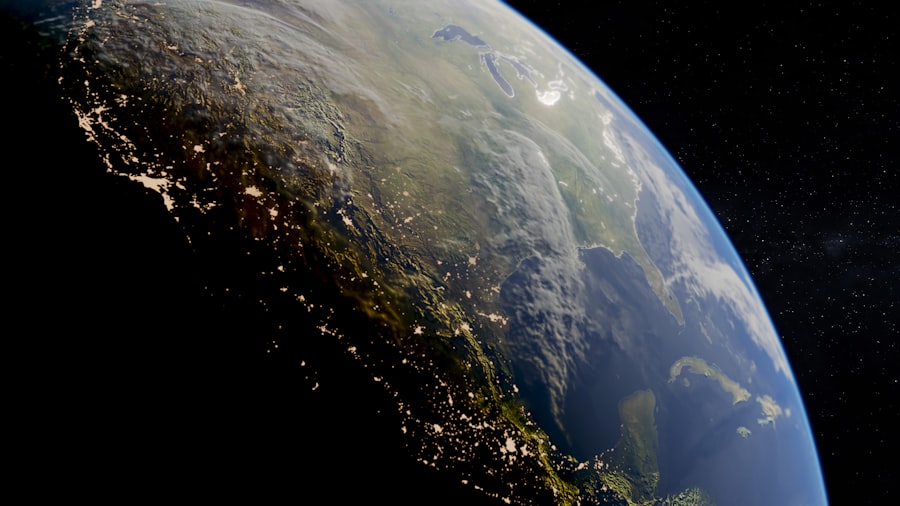
The Earth’s atmosphere, a thin gaseous envelope, is a dynamic system constantly in motion, driven by the Sun’s energy. This motion manifests as weather patterns, from gentle breezes to violent storms, and over longer timescales, as climate.
Solar Radiation: The Sun’s Influence
The primary driver of atmospheric processes is solar radiation. The uneven heating of the Earth’s surface by the Sun creates temperature differences, which in turn drive air movement. Equatorial regions receive more direct sunlight and are warmer, while polar regions receive less direct sunlight and are colder. This temperature gradient is the fundamental engine of atmospheric circulation.
Atmospheric Circulation: Global Wind Patterns
The differential heating of the Earth creates large-scale patterns of air circulation. Warm air rises in the tropics and moves towards the poles, while cold air from the poles sinks and moves towards the equator. This global circulation is further influenced by the Earth’s rotation, leading to the development of prevailing wind patterns like the trade winds and the westerlies. These winds are the planet’s great atmospheric rivers, transporting heat and moisture around the globe.
The Hydrologic Cycle: Water in Motion
The hydrologic cycle, also known as the water cycle, is a fundamental process that links the atmosphere, oceans, and land. It describes the continuous movement of water on, above, and below the surface of the Earth. Solar energy drives evaporation from oceans, lakes, and rivers, and transpiration from plants. This water vapor rises into the atmosphere, cools, and condenses to form clouds. Precipitation in the form of rain, snow, sleet, or hail then returns water to the Earth’s surface, where it can flow into rivers, seep into the ground, or evaporate again. This never-ending journey of water is essential for all life on Earth.
Weather Systems: The Orchestra of the Atmosphere
Weather systems are localized disturbances within the larger atmospheric circulation. These include high and low-pressure systems, fronts, and storms. Low-pressure systems are often associated with rising air, cloud formation, and precipitation, while high-pressure systems are typically associated with sinking air, clear skies, and fair weather. The interaction of these systems, along with the influence of topography and local conditions, creates the diverse weather we experience.
The Oceans’ Embrace: Currents and Their Impact
The Earth’s oceans, covering over 70% of its surface, are not static bodies of water but vast, interconnected systems of currents that play a crucial role in regulating global climate and distributing heat.
Ocean Currents: Global Conveyor Belts
Ocean currents are large-scale movements of water in the oceans. They are driven by a combination of factors, including wind, differences in water density (due to temperature and salinity variations), and the Earth’s rotation (the Coriolis effect). These currents act like massive conveyor belts, transporting heat from the tropics towards the poles and cold water from the poles towards the equator.
Surface Currents: The Wind’s Whisper
Surface currents are primarily driven by prevailing winds. As winds blow across the ocean surface, they drag the water along, creating currents. The Gulf Stream, for example, is a powerful warm surface current that transports heat from the Caribbean Sea across the Atlantic Ocean, influencing the climate of Western Europe.
Deep Ocean Currents: The Density’s Dance
Deep ocean currents, also known as thermohaline circulation, are driven by differences in water density. Cold, salty water is denser than warm, fresh water, and therefore sinks. This sinking water then flows slowly across the ocean floor, eventually rising in other parts of the world to complete a vast, global circulation system. This deep ocean circulation is a critical regulator of global climate, influencing carbon dioxide uptake and nutrient distribution.
Role in Climate Regulation
Ocean currents are indispensable to Earth’s climate regulation. By transporting heat, they moderate temperatures, preventing extreme fluctuations between seasons and regions. For instance, the warm waters of the Gulf Stream keep much of Northern Europe warmer than its latitude would otherwise suggest. Furthermore, the oceans absorb a significant amount of atmospheric carbon dioxide, acting as a vital carbon sink. Changes in ocean currents can therefore have profound impacts on global climate patterns.
Earth science encompasses a wide range of topics, including geology, meteorology, and oceanography, all of which help us understand our planet’s processes and systems. For those interested in exploring the intricate connections between these elements, a fascinating article can be found at Freaky Science, which delves into the various ways these disciplines interact and influence one another. This resource provides valuable insights into how understanding these elements can lead to better environmental stewardship and awareness.
Earth’s Rhythms: Cycles of Change
| Element | Description | Common Metrics | Units |
|---|---|---|---|
| Atmosphere | Layer of gases surrounding Earth | Air Pressure, Temperature, Humidity | hPa, °C, % |
| Hydrosphere | All water on Earth including oceans, rivers, lakes | Salinity, Water Temperature, pH | ppt, °C, pH units |
| Geosphere | Solid Earth including rocks, minerals, and landforms | Rock Density, Seismic Velocity, Mineral Composition | g/cm³, km/s, % |
| Biosphere | All living organisms on Earth | Biomass, Species Diversity, Primary Productivity | kg/m², Index, gC/m²/day |
| Cryosphere | Frozen water parts of Earth including glaciers and ice caps | Ice Thickness, Snow Cover, Albedo | m, km², % |
The Earth is not a static entity; it is a planet in perpetual motion, subject to a multitude of cycles that shape its very existence and the life it harbors. These cycles, operating on timescales ranging from minutes to eons, are fundamental to understanding Earth’s dynamic nature.
The Carbon Cycle: Life’s Essential Element
The carbon cycle is the biogeochemical cycle by which carbon is exchanged among the biosphere, pedosphere, geosphere, hydrosphere, and atmosphere of the Earth. Carbon is essential for all known life. The movement of carbon through the Earth’s systems is a complex interplay of biological, geological, and chemical processes. Plants absorb carbon dioxide from the atmosphere during photosynthesis, and this carbon is then transferred through the food chain. When organisms die, decomposers release carbon back into the atmosphere or soil. Over geological time, carbon can be stored in rocks, fossil fuels, and the oceans. Human activities, particularly the burning of fossil fuels, have significantly altered the natural balance of the carbon cycle.
The Nitrogen Cycle: The Breath of Life
Nitrogen is another essential element for life, making up about 78% of the Earth’s atmosphere. However, most organisms cannot directly utilize atmospheric nitrogen. The nitrogen cycle involves a series of biological and chemical transformations that convert atmospheric nitrogen into usable forms. Nitrogen-fixing bacteria convert atmospheric nitrogen into ammonia, which is then converted into nitrates by other bacteria. Plants absorb nitrates from the soil, and this nitrogen is passed on to animals. When organisms die, decomposers break down organic matter, releasing nitrogen back into the soil and atmosphere.
The Rock Cycle: Earth’s Recycling System
The rock cycle is a fundamental concept in geology that describes the processes by which rocks are formed, broken down, and reformed. Igneous rocks are formed from molten magma or lava. These rocks can be weathered and eroded to form sediment, which is then compacted and cemented to form sedimentary rocks. Under intense heat and pressure, both igneous and sedimentary rocks can be transformed into metamorphic rocks. All types of rocks can be melted to form magma, thus completing the cycle. This constant recycling of Earth’s rocky material is a testament to its enduring dynamism.
The Hydrological Cycle: A Continuous Journey (Revisited)
As previously discussed, the hydrologic cycle is a continuous process of water movement and transformation. This cycle is not just about the availability of water for life; it is also a powerful force shaping the Earth’s surface through erosion and deposition. Rainfall and runoff carve valleys and canyons, while rivers transport sediment to the oceans, where it can accumulate to form new landforms. The constant ebb and flow of water is a palpable representation of Earth’s dynamic nature.
In conclusion, the Earth is a planet alive with countless dynamic processes. From the immense pressures and temperatures that churn within its core to the delicate dance of sunlight and atmosphere, every system interacts and influences the others. Understanding these processes, their interconnectedness, and their influence on our planet is not just an intellectual exercise; it is a vital imperative for humanity as we strive to live in balance with the extraordinary world we call home. The ongoing unraveling of these mysteries empowers us to better comprehend our place in the universe and to act as responsible stewards of this remarkable, dynamic Earth.
FAQs
What are the main branches of Earth science?
Earth science primarily includes geology, meteorology, oceanography, and astronomy. These branches study the Earth’s structure, atmosphere, oceans, and its place in the universe, respectively.
What is the importance of studying Earth science?
Studying Earth science helps us understand natural processes, predict natural disasters, manage natural resources, and address environmental challenges such as climate change.
What are the key elements studied in Earth science?
Key elements include the Earth’s materials (rocks, minerals, soil), atmospheric conditions, water bodies, and the processes that shape the Earth’s surface and environment.
How does Earth science contribute to environmental protection?
Earth science provides critical data on pollution, climate change, and natural resource management, enabling informed decisions to protect ecosystems and promote sustainable development.
What tools and methods are used in Earth science research?
Earth scientists use tools like satellites, seismographs, weather stations, and computer models to collect data and analyze Earth’s systems and processes.