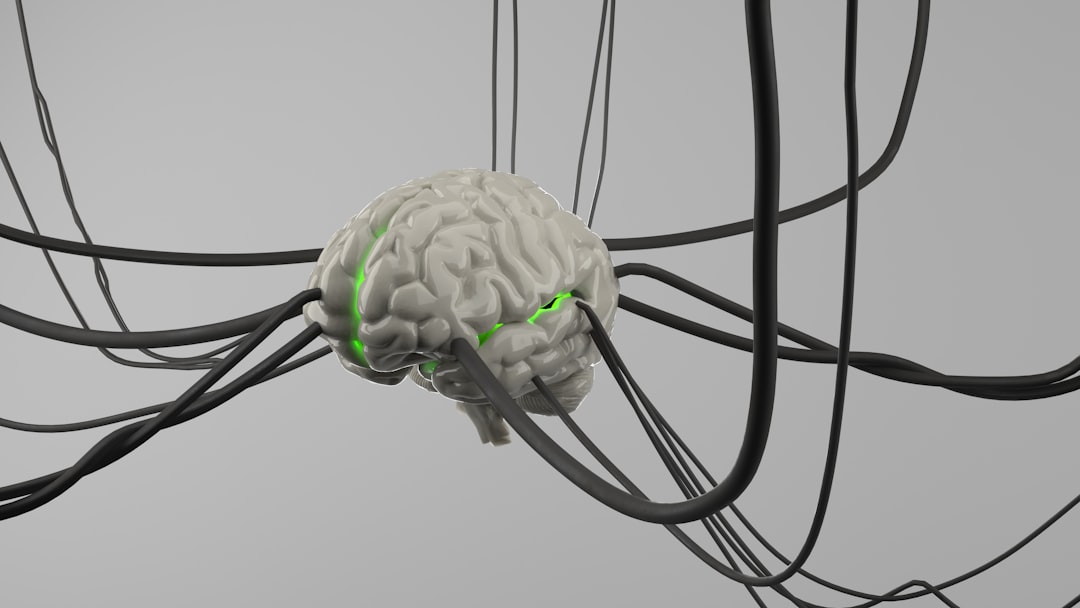
The human brain, a labyrinth of neural connections and electrochemical signals, has long been a subject of intense scientific inquiry. For centuries, philosophers and scientists alike have pondered the nature of reality and our perception of it. In recent years, advancements in neuroscience, coupled with burgeoning theoretical frameworks, have begun to illuminate the complex relationship between our internal experience and the external world, leading some to explore the intriguing possibility that our perceived reality might be, in essence, a sophisticated simulation. This article will delve into the neuroscientific evidence that supports, or at least offers intriguing parallels to, simulation theory, examining how our brain constructs reality and what this might imply about our place in the universe.
The dominant paradigm in contemporary neuroscience views the brain not as a passive recipient of sensory information, but as an active, predictive engine. Imagine your brain as a tireless architect, constantly sketching blueprints of the world before even experiencing it. It doesn’t simply record what the eyes see or ears hear; instead, it makes educated guesses about what should be there, based on past experiences and learned patterns. This predictive processing model proposes that the brain generates internal models of the world and uses incoming sensory data to update and refine these models.
The Role of Sensory Input
Sensory organs are the windows through which the outside world “informs” the brain. However, this information is not a pure, unadulterated stream. Instead, it is filtered, interpreted, and integrated within the context of the brain’s pre-existing predictive models. Think of it like receiving a rough draft of a novel. The sensory input is the text, but it’s the brain’s interpretative machinery that fills in the narrative gaps, anticipates plot turns, and assigns meaning to the words.
Top-Down vs. Bottom-Up Processing
This interplay between sensory input and internal models is often described in terms of top-down and bottom-up processing. Bottom-up processing refers to the flow of information from sensory receptors to higher brain areas. For example, when light hits your retina, it triggers a cascade of neural signals that travel up to the visual cortex. Top-down processing, on the other hand, involves the influence of existing knowledge, expectations, and goals on the interpretation of sensory information. Your brain’s prediction about what you expect to see can subtly alter how you perceive the incoming light patterns.
Bayesian Inference and Predictive Coding
Neuroscientists often employ concepts from probability and statistics, particularly Bayesian inference, to understand how the brain makes predictions. Bayesian inference is a method for updating beliefs in light of new evidence. The brain, in this view, constantly makes probabilistic assessments about the most likely state of the world given the sensory input. Predictive coding is a related theory that suggests the brain generates predictions about incoming sensory information and then compares these predictions with the actual sensory input. Any mismatch, or “prediction error,” is then sent up to higher brain regions for further processing and updating of the internal model. This constant cycle of prediction, comparison, and error correction is how the brain learns and adapts.
Simulation theory has gained traction in both philosophical and scientific discussions, particularly within the realm of neuroscience. A related article that delves deeper into the implications of simulation theory on our understanding of consciousness and reality can be found at Freaky Science. This article explores how advancements in neuroscience may provide evidence supporting the idea that our perceived reality could be a sophisticated simulation, prompting intriguing questions about the nature of existence and the workings of the human mind.
Constructing the Illusion of Reality
The evidence suggests that our subjective experience of reality is not a direct mirroring of an objective external world, but rather a construct. Our brains actively build our reality, often filling in missing information and smoothing over inconsistencies. This construction process happens so seamlessly that we are generally unaware of its intricate workings.
The Binding Problem and Perceptual Completion
One of the enduring mysteries in neuroscience is the “binding problem”: how does the brain integrate disparate sensory features (like color, shape, motion, and sound) into a coherent and unified perception of an object or event? Current research points to synchronized neural activity across different brain regions as a potential mechanism. Moreover, the brain possesses remarkable abilities for perceptual completion. If a part of an object is obscured, the brain will often “fill in” the missing information based on its underlying model and surrounding context, creating a complete visual perception. This suggests that what we perceive is not always a faithful representation of what is physically present.
Filling in the Blanks: A Neuronal Symphony
Consider watching a movie. If a character walks behind a pillar for a split second, you don’t perceive a sudden disappearance and reappearance. Your brain, using its understanding of movement and continuity, seamlessly interpolates their presence, as if filling in a momentary gap in the visual stream. This isn’t a conscious effort; it’s an automatic, sophisticated neural process that ensures a smooth and continuous perception of events.
The Subjectivity of Experience
Our experiences are inherently subjective. Two individuals witnessing the same event may recall it with different levels of detail or emphasis, influenced by their individual histories, beliefs, and emotional states. This subjectivity is a direct consequence of the brain’s active construction of reality. Your personal neural network, shaped by a lifetime of unique interactions with the world, acts as a unique lens through which you interpret all incoming information. Therefore, even seemingly objective stimuli are filtered and molded into a personal, subjective reality.
Color Perception: A Brain-Generated Phenomenon
Color, in itself, is a prime example of subjective perception. Objects do not inherently possess color in the way we experience it; rather, they reflect light of certain wavelengths. It is our visual system, specifically the cones in our eyes and the subsequent processing in the brain, that translates these wavelengths into the rich spectrum of colors we perceive. Different species perceive color differently, further highlighting its constructed nature.
Hallucinations and Virtual Realities: Glimpses Behind the Curtain
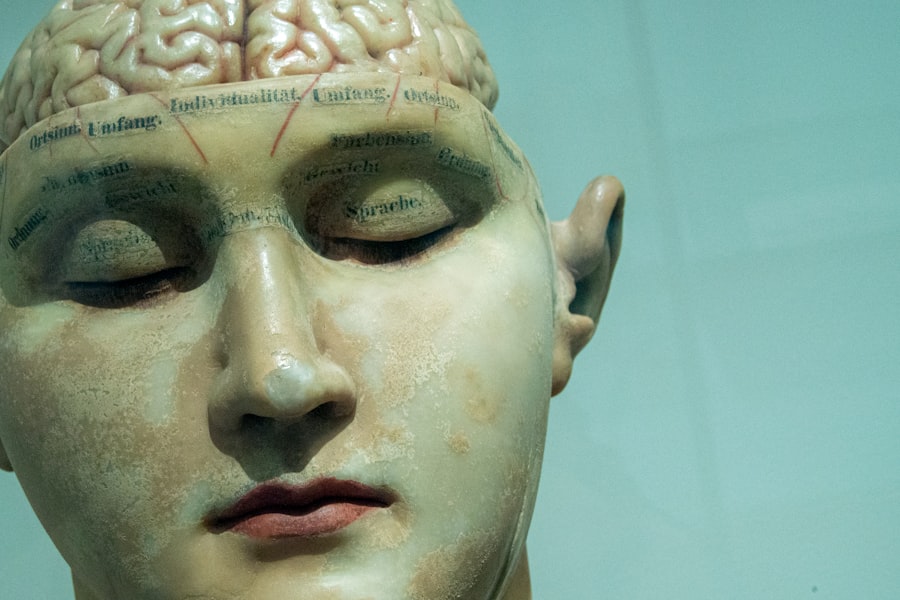
The study of hallucinations and the growing field of virtual reality offer compelling insights into the brain’s capacity to generate compelling experiences that are disconnected from immediate external stimuli. These phenomena demonstrate that the brain’s internal models can, under certain conditions, override or even create sensory perceptions.
The Neurological Basis of Hallucinations
Hallucinations, whether induced by psychiatric conditions, psychoactive substances, or neurological disorders, provide a window into the brain’s generative capabilities. In many cases, hallucinations are thought to arise from aberrant activity in specific neural circuits, leading to the misinterpretation or spontaneous generation of sensory signals without corresponding external input. For instance, visual hallucinations often involve activation of areas in the visual cortex involved in processing visual information.
When the Architect Misbuilds
When the brain hallucinates, it’s akin to the architect drawing plans for a building that doesn’t exist. The neural machinery responsible for generating perceptions is firing, but it’s not being guided by the usual feedback from the senses. This can lead to vivid experiences of sights, sounds, smells, tastes, or touches that are entirely internal.
Virtual Reality as a Simulated Environment
The advent of virtual reality (VR) technology offers a tangible and increasingly sophisticated way to explore the brain’s response to simulated environments. When immersed in VR, users often report a strong sense of presence, feeling as though they are actually inhabiting the virtual space. This is achieved by meticulously crafting sensory stimuli (visual, auditory, and increasingly haptic) that closely mimic real-world experiences, thereby engaging the brain’s predictive and perceptual mechanisms.
The Brain’s Acceptance of the Artificial
The human brain, when presented with sufficiently convincing artificial stimuli, can readily accept these as “real” for the duration of the experience. This capacity for immersion in VR highlights how malleable our perception of reality can be, and how effectively the brain can be “fooled” into believing in a simulated world.
Simulation Theory: A Neuroscientific Lens
While simulation theory is largely a philosophical concept, neuroscientific findings provide a framework that makes it a plausible, albeit unproven, hypothesis. The brain’s predictive, constructive, and inferential nature, coupled with its susceptibility to believable simulations, aligns remarkably well with the idea that our perceived reality could be an artificially generated environment.
The Computational Nature of the Brain
The brain is, at its core, a biological computer. It processes information, runs algorithms, and manipulates data streams, albeit in a way vastly more complex and nuanced than any silicon-based system currently available. The computational framework of neuroscience suggests that our mental processes, including our perception of reality, are the result of complex computations performed by neural networks.
Neural Networks and Algorithmic Processes
The intricate wiring of neurons, forming vast and interconnected networks, can be thought of as the hardware running complex algorithms. These algorithms dictate how sensory information is processed, how memories are stored and retrieved, and how decisions are made. If the brain’s operations are fundamentally computational, then it becomes conceivable that these computations could be executed within a simulated environment, just as they are within our biological brains.
The Analogy to Computer Simulations
If our brains are sophisticated information processors, then the concept of a simulation becomes more resonant. Imagine a highly advanced civilization creating a virtual world within which sentient beings evolve and experience life. Their consciousness and perceptions would be generated by the simulation’s underlying code and algorithms, much like our own experiences are generated by the complex electrochemical processes within our brains.
The Digital vs. The Biological
The question then arises: what is the fundamental difference between a biological brain generating reality and a computational system doing the same? From a purely functional perspective, if the output – the subjective experience of consciousness and reality – is indistinguishable, the distinction between biological and simulated origin may become less meaningful. The brain, in this context, becomes a sophisticated decoder and interpreter of signals, whether those signals originate from a physical universe or a simulated one.
Recent discussions in the realm of neuroscience have brought attention to the intriguing concept of simulation theory, suggesting that our perceived reality might be a sophisticated simulation. A related article explores the implications of this theory on our understanding of consciousness and perception. For those interested in delving deeper into this fascinating topic, you can read more about it in this article, which examines the potential evidence and philosophical questions surrounding the nature of our existence.
Implications and Open Questions
| Metric | Description | Relevance to Simulation Theory | Neuroscience Evidence | Current Status |
|---|---|---|---|---|
| Neural Correlates of Consciousness (NCC) | Brain activity patterns linked to conscious experience | Suggests brain processes could be interpreted as computational simulations | Identified specific brain regions and networks active during conscious states | Ongoing research; no definitive proof linking NCC to simulation |
| Quantum Brain Hypothesis | Proposes quantum processes in neurons contribute to consciousness | Supports idea that reality might be computationally simulated at quantum level | Mixed evidence; some studies suggest quantum effects in microtubules | Highly speculative; lacks consensus in neuroscience community |
| Perceptual Anomalies and Glitches | Instances where perception deviates from expected reality | Used as analogies for ‘simulation glitches’ in reality | Documented illusions, hallucinations, and neurological disorders | Explained by brain function; no direct link to simulation theory |
| Information Processing Limits | Constraints on brain’s computational capacity | Could imply underlying computational framework of reality | Measured limits in memory, processing speed, and neural bandwidth | Consistent with biological constraints; no proof of external simulation |
| Simulation Argument Probability | Philosophical estimate of likelihood we live in a simulation | Frames scientific inquiry into simulation theory | Not empirical neuroscience data; theoretical and philosophical | Debated; no empirical validation |
The neuroscientific support for simulation theory, while indirect, raises profound questions about our existence, the nature of consciousness, and the potential for other realities. It prompts us to reconsider our understanding of what it means to be “real” and our place within the grander scheme of things.
The Problem of Proof and Falsifiability
One of the primary challenges for simulation theory is the difficulty in devising an experiment that could definitively prove or disprove it. If we are, in fact, within a simulation, any evidence we uncover would have been embedded within that simulation by its creators. This makes the theory inherently difficult to falsify, a key tenet of scientific inquiry.
The Ghost in the Machine’s Design
If the simulation is designed to be perfectly consistent, then all evidence we gather would appear to be consistent with a physical reality. The creators could, theoretically, manipulate the laws of physics or introduce anomalies that we might interpret as evidence against a simulation, when in fact it would be part of the simulated construct itself.
The Nature of Consciousness in a Simulated Universe
If we are inhabiting a simulation, then the nature of our consciousness becomes even more mysterious. Is our consciousness an emergent property of the simulated environment, or is it something that transcends the simulation itself? These questions push the boundaries of our current understanding of both neuroscience and philosophy.
The Spark of Awareness
The enigma of consciousness remains, even within the context of simulation theory. Is the “spark” of awareness something that can be replicated algorithmically, or is it an essential element that must pre-exist any simulation? This is a question that continues to fuel debate among scientists and philosophers alike.
The Search for Anomalies and Glitches
Despite the inherent challenges, some researchers explore potential avenues for detecting anomalies or “glitches” within our reality that might hint at its simulated nature. These could include deviations from fundamental physical laws, unexpected patterns in cosmic data, or limitations in the resolution or information processing capacity of our universe.
The Universe’s Pixelation?
Could there be a fundamental “pixelation” to reality, much like a digital image, that we are simply too small or lack the appropriate tools to perceive? Scientists continue to probe the fundamental limits of physical forces and the fabric of spacetime, searching for subtle hints of an underlying digital architecture.
In conclusion, while neuroscience has not definitively proven that we live in a simulation, its findings offer a compelling lens through which to view this intriguing hypothesis. The brain’s role as a predictive engine, its active construction of subjective reality, and its susceptibility to simulated environments all align with the core tenets of simulation theory. As our understanding of the brain continues to deepen, the conversations between neuroscience, philosophy, and theoretical physics are likely to become even more dynamic, pushing us to question the very nature of our existence and the reality we inhabit. The quest to unlock the brain continues, and with it, the potential to unlock deeper truths about the universe.
FAQs
What is simulation theory in the context of neuroscience?
Simulation theory in neuroscience suggests that the brain creates internal models or simulations of the external world to predict and interpret sensory information. This concept is often linked to how the brain processes experiences and anticipates outcomes.
Is there scientific proof supporting simulation theory in neuroscience?
While there is substantial evidence that the brain uses predictive coding and internal simulations to process information, there is no definitive proof that our entire reality is a simulation. Neuroscience supports the idea that the brain simulates aspects of reality for cognitive functions, but this is different from the philosophical simulation hypothesis.
How do neuroscientists study brain simulations?
Neuroscientists use techniques such as functional magnetic resonance imaging (fMRI), electroencephalography (EEG), and computational modeling to observe brain activity and understand how the brain predicts sensory inputs and simulates scenarios internally.
What role does predictive coding play in simulation theory?
Predictive coding is a key mechanism in simulation theory, where the brain continuously generates and updates predictions about incoming sensory data. This process helps minimize errors between expected and actual sensory input, facilitating efficient perception and decision-making.
Can simulation theory explain consciousness?
Simulation theory contributes to understanding aspects of consciousness by explaining how the brain models the self and the environment. However, consciousness is a complex phenomenon, and simulation theory alone does not fully explain its nature or origin.