The Earth’s magnetic field, a dynamic and invisible shield, constantly protects the planet from a barrage of harmful solar radiation. This intricate geomagnetic bubble, generated by the convective motion of molten iron in the outer core, is not static but a continuously evolving system. While generally stable, instances of its weakening, reversals, or localized anomalies, collectively termed magnetic field failures, have occurred throughout geological history and continue to be observed today. Understanding these phenomena requires delving into the complex interplay of geophysics, fluid dynamics, and solar influences.
The genesis of Earth’s magnetic field lies within its molten outer core, a region of searing heat and immense pressure. Here, the convection of liquid iron, charged particles, and the planet’s rotation collectively orchestrate a self-sustaining dynamo. Fluctuations in this intricate system represent the most fundamental cause of magnetic field failures.
Convection Patterns and Reversals
The molten iron in the outer core undergoes vigorous convection, with hotter, less dense material rising and cooler, denser material sinking. This perpetual motion, influenced by the Coriolis effect, creates helical flows that stretch and twist magnetic field lines, amplifying them in a process known as the geodynamo. A magnetic reversal occurs when these complex convection patterns undergo a fundamental shift, leading to a complete inversion of the magnetic poles. This is not an instantaneous event but a gradual process spanning thousands of years, characterized by a significant weakening of the dipole field and the emergence of multipolar components. Imagine a deeply stirred pot of thick soup; sometimes the swirls and currents become so chaotic they momentarily dissipate before reforming in an opposing direction.
Core-Mantle Boundary Interactions
The interface between the Earth’s molten outer core and its solid mantle, known as the core-mantle boundary (CMB), is not a passive barrier but a dynamic region. Heat transfer across the CMB influences the convection patterns within the outer core. Irregularities in the mantle’s temperature and composition can create localized variations in heat flow, potentially disrupting the geodynamo. For instance, large low-shear-velocity provinces (LLSVPs) at the base of the mantle are hypothesized to influence core dynamics and may contribute to regional magnetic field anomalies. These interactions are akin to the subtle nudges a puppeteer gives to their creation, influencing its overall movement.
Internal Dynamo Fluctuations
Even without a full reversal, the strength and morphology of the Earth’s magnetic field exhibit natural fluctuations. These internal dynamo variations can lead to periods of reduced field strength, allowing more cosmic radiation to penetrate the upper atmosphere. Such fluctuations are a normal part of the geodynamo’s operation, akin to the ebb and flow of a powerful river, never perfectly constant but always moving.
Recent studies have highlighted the critical implications of magnetic field failures on both technology and the environment. For a deeper understanding of this phenomenon and its potential consequences, you can explore a related article that delves into the science behind magnetic field disruptions and their effects on various systems. To read more, visit Freaky Science.
External Influences and Space Weather
While the primary source of the magnetic field resides within Earth’s core, external factors, particularly those originating from the Sun, can significantly impact its configuration and effectiveness. These external influences are often associated with space weather events.
Solar Wind Pressure and Compression
The Sun continuously emits a stream of charged particles known as the solar wind. This plasma constantly buffets the Earth’s magnetosphere, the region of space controlled by its magnetic field. During periods of heightened solar activity, such as coronal mass ejections (CMEs), the solar wind can intensify, exerting increased pressure on the magnetosphere. This pressure compresses the magnetic field on the sunward side of Earth and stretches it into a long tail on the nightside, temporarily weakening its protective capabilities in localized regions. Think of a strong gust of wind pushing against an umbrella, momentarily deforming its protective canopy.
Geomagnetic Storms and Substorms
When the solar wind’s magnetic field aligns oppositely to Earth’s magnetic field, a process called magnetic reconnection can occur. This allows solar plasma and energy to penetrate the magnetosphere, triggering geomagnetic storms. These storms manifest as rapid and significant disturbances in the magnetic field, leading to auroras, disruptions to power grids, and interference with satellite communications. Substorms are smaller, more localized versions of these disturbances, often occurring in the polar regions. These events are like sudden surges in an electrical circuit, temporarily overwhelming and disrupting its normal operation.
Radiation Belt Dynamics
The Earth’s magnetic field traps charged particles from the solar wind, forming radiation belts known as the Van Allen belts. During geomagnetic storms, these belts can become energized, accelerating particles to dangerous levels. These energetic particles can pose a threat to spacecraft and astronauts, contributing to the “failure” of the magnetic shield to adequately protect technological assets in orbit. The radiation belts, while generally beneficial, can become a double-edged sword during intense solar events.
Paleomagnetic Evidence and Historical Failures

The Earth’s magnetic field has a deep and well-documented history of changes, recorded within rocks and sediments. This paleomagnetic evidence provides crucial insights into past failures and reversals.
Magnetic Reversal Records
Throughout geological history, the Earth’s magnetic poles have completely reversed numerous times. These reversals are recorded in the magnetization of ancient rocks. As molten rock cools and solidifies, magnetic minerals within it align with the prevailing magnetic field, preserving a “fossilized” record of its direction and intensity. Studying these records reveals that reversals are not periodic but occur at irregular intervals, ranging from thousands to millions of years. This geological “tape recording” allows scientists to reconstruct the Earth’s magnetic past.
Excursions and Weakening Phases
Besides full reversals, paleomagnetic data also reveal instances of magnetic excursions, where the magnetic poles drift significantly from their usual positions but do not complete a full reversal. During these excursions, and even during periods preceding full reversals, the magnetic field significantly weakens, sometimes to as little as 10% of its normal strength. These periods of weakening are periods of heightened vulnerability for the planet, akin to a castle wall cracking and crumbling before a full breach.
The South Atlantic Anomaly (SAA)
A prominent present-day example of a localized magnetic field failure is the South Atlantic Anomaly (SAA). In this region, which stretches across South America and the southern Atlantic Ocean, the Earth’s magnetic field is significantly weaker than average. This weakening allows inner Van Allen belt particles to dip closer to the Earth’s surface, increasing radiation exposure for low-Earth orbit satellites passing through the area. The SAA is thought to be linked to a region of reversed flux in the outer core, highlighting the ongoing dynamic nature of the geodynamo. It serves as a tangible, current example of a “failure” of the magnetic shield to provide consistent protection.
Consequences and Potential Impacts
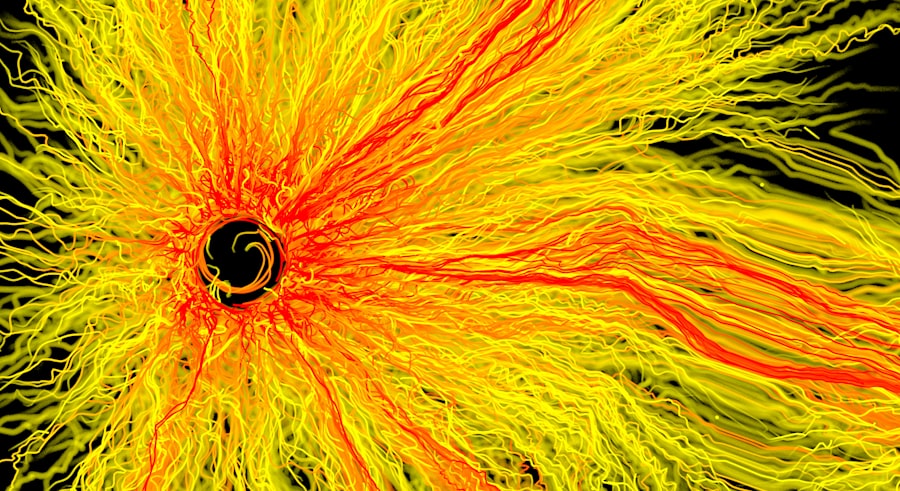
The ramifications of magnetic field failures, whether localized or global, extend beyond purely scientific interest, potentially affecting technological infrastructure and even biological life.
Increased Radiation Exposure
A primary consequence of a weakening magnetic field is increased exposure to solar and cosmic radiation. During periods of reduced field strength, more charged particles can penetrate the atmosphere, particularly at polar latitudes. This presents a heightened risk for astronauts and satellite operations, potentially leading to increased satellite malfunctions, data corruption, and even damage to electronic components through single-event upsets. For terrestrial life, a significant long-term weakening could lead to an increase in skin cancer rates and other radiation-related health issues, though the atmosphere still provides a substantial protective layer.
Atmospheric Loss and Climate Effects
While less immediate, prolonged periods of a significantly weakened or absent magnetic field could have long-term atmospheric consequences. Without the magnetic field’s protective embrace, the solar wind could strip away atmospheric gases at a faster rate, similar to what is believed to have occurred on Mars. This atmospheric loss could lead to increased surface radiation and potentially impact global climate patterns, though the Earth’s much larger mass and stronger gravity would make it more resilient than Mars. This long-term atmospheric erosion is akin to a slow, persistent leak in a sealed container.
Disruption of Technology and Communication
Modern society is heavily reliant on technology that is vulnerable to changes in the magnetic field. Geomagnetic storms, even temporary ones, can induce currents in long power lines and pipelines, leading to power outages and damage to infrastructure. Satellite communications, GPS systems, and even some animal navigation abilities are also susceptible to disruptions during periods of magnetic field instability. These technological interdependencies create a delicate balance, where a seemingly invisible force can have tangible, widespread effects.
Recent advancements in understanding magnetic field failures have shed light on their implications for both technology and natural phenomena. A fascinating article discusses the potential consequences of such failures on satellite communications and navigation systems, emphasizing the need for robust protective measures. For more insights on this topic, you can read the full article here. This exploration not only highlights the scientific challenges but also the broader impact on our daily lives, making it a crucial area of study in modern science.
Future Trends and Monitoring Efforts
| Metric | Description | Typical Values | Impact on Magnetic Field Failure |
|---|---|---|---|
| Magnetic Flux Density (B) | Measure of magnetic field strength in a given area (Tesla) | 0.001 – 2 T (varies by application) | Lower than expected flux density can indicate partial failure or degradation |
| Coercivity (Hc) | Resistance of a magnetic material to becoming demagnetized (A/m) | 100 – 10000 A/m depending on material | Reduced coercivity can lead to easier magnetic field failure |
| Remanence (Br) | Residual magnetization remaining after external field is removed (Tesla) | 0.1 – 1.5 T | Lower remanence indicates loss of magnetic strength, contributing to failure |
| Temperature (°C) | Operating temperature of magnetic material | -40 to 150 °C (varies by material) | High temperatures can cause thermal demagnetization and failure |
| Hysteresis Loop Area | Energy loss per magnetization cycle (J/m³) | Varies widely by material | Increased losses can indicate material fatigue and impending failure |
| Magnetic Permeability (μ) | Ability of material to support formation of magnetic field | 1 (vacuum) to 5000+ (ferromagnetic materials) | Decreased permeability can signal structural or compositional failure |
| External Magnetic Interference | Presence of external magnetic fields disrupting system | Varies by environment | Can cause temporary or permanent magnetic field failure |
The Earth’s magnetic field is not static; it is a continually evolving system. Scientists are actively monitoring its current state and developing models to predict its future behavior.
Current Weakening Trend
Observations over the past two centuries indicate a global weakening of the Earth’s dipole magnetic field, with an approximate 5% decrease per century. This weakening is not uniform across the globe; some regions, like the South Atlantic Anomaly, are experiencing more rapid declines. While this trend does not necessarily signal an imminent reversal, it highlights the dynamic nature of the geodynamo and the need for continued vigilance. This slow decline is like a watch’s battery gradually losing its charge over time.
Satellite Missions and Ground-Based Observatories
A global network of ground-based observatories and specialized satellite missions, such as the European Space Agency’s Swarm constellation, continuously monitor the Earth’s magnetic field. These instruments provide invaluable data on its strength, direction, and long-term variations. By combining these observations with sophisticated computer models, scientists are working to refine their understanding of the geodynamo and improve predictions of space weather events. These observatories are the Earth’s vital signs monitors, providing continuous feedback on its magnetic health.
Modeling and Prediction Challenges
Predicting the precise timing and nature of future magnetic field failures, especially full reversals, remains a significant scientific challenge. The complexity of the geodynamo, with its turbulent fluid dynamics and interactions with the mantle, requires advanced computational models. While significant progress has been made, accurately forecasting these events with the precision of weather forecasting is still decades away. The Earth’s core remains a vast, largely inaccessible laboratory, making its inner workings particularly difficult to fully decipher. It’s like trying to predict the precise path of a cork in a rapidly boiling pot without being able to see the heat source or the exact currents.
Understanding the science behind magnetic field failures is crucial for protecting our technological infrastructure and for comprehending the long-term evolution of our planet. While the Earth’s magnetic field has proven resilient over billions of years, its dynamic nature necessitates ongoing research and careful monitoring. The subtle whispers of change within the geodynamo will continue to shape our world in profound and fascinating ways.
FAQs
What is a magnetic field failure in scientific terms?
A magnetic field failure refers to a significant weakening or disruption of a planet’s magnetic field, which can affect its ability to shield the surface from solar and cosmic radiation.
What causes the Earth’s magnetic field to weaken or fail?
The Earth’s magnetic field is generated by the movement of molten iron in its outer core. Changes in this geodynamo process, such as shifts in fluid flow or temperature variations, can cause the magnetic field to weaken or undergo reversals.
How often do magnetic field reversals or failures occur?
Magnetic field reversals, where the magnetic north and south poles switch places, have occurred irregularly throughout Earth’s history, approximately every 200,000 to 300,000 years, though the timing is not consistent.
What are the potential consequences of a magnetic field failure?
A weakened or failed magnetic field can lead to increased exposure to harmful solar and cosmic radiation, which may impact satellite operations, communication systems, and increase radiation risks for living organisms.
Can magnetic field failures be predicted or monitored?
Scientists monitor the Earth’s magnetic field using satellites and ground-based observatories to track changes and anomalies. While exact predictions of failures or reversals are challenging, ongoing research aims to improve understanding and forecasting.