
Quantum mechanics, the bedrock of our understanding of the universe at its most fundamental level, presents a startling departure from the intuitive reality we experience daily. It is a realm where particles can exist in multiple states simultaneously, where observation fundamentally alters outcomes, and where causality itself seems to bend. This article delves into the profound paradoxes that emerge from quantum theory, exploring how these seemingly contradictory phenomena are not flaws but rather integral features of quantum reality. By unraveling these perplexing concepts, we can begin to grasp the alien yet remarkably accurate picture of existence painted by quantum physics.
At the heart of quantum mechanics lies the principle of superposition, a concept that challenges our everyday understanding of objects occupying discrete locations. Imagine a coin spinning in the air. Before it lands, it’s neither definitively heads nor tails; its state is indeterminate. Quantum superposition takes this indeterminacy to an extreme. A quantum particle, such as an electron, can exist in a combination of all its possible states simultaneously. This means an electron, for instance, might not be in “this” position or “that” position, but rather in a probabilistic blend of all possible positions until it is measured.
Schrödinger’s Cat: A Macabre Thought Experiment
One of the most famous illustrations of superposition is Erwin Schrödinger’s thought experiment involving a cat. In this scenario, a cat is placed in a sealed box with a radioactive atom, a Geiger counter, a hammer, and a vial of poison. If the atom decays, the Geiger counter detects it, triggering the hammer to break the vial and kill the cat. According to quantum mechanics, until the box is opened and the atom’s state observed, the atom exists in a superposition of both decayed and undecayed states. This, in turn, means the cat is simultaneously alive and dead.
The Role of Observation: Collapse of the Wavefunction
The paradox arises when we consider observation. The act of opening the box to check on the cat forces the quantum system to “choose” a definite state. This is known as the collapse of the wavefunction. Before observation, the cat is in a superposition; after observation, it is definitively either alive or dead. This suggests that consciousness or the act of measurement itself plays a crucial role in defining reality, a notion that has sparked considerable debate. It is as if the universe holds its breath, waiting for us to peek before deciding what state to present.
Quantum Computing: Harnessing Superposition
The power of superposition is not merely a philosophical curiosity; it forms the basis of revolutionary technologies like quantum computing. Classical computers store information as bits, which can be either 0 or 1. Quantum computers utilize qubits, which can represent 0, 1, or a superposition of both. This allows quantum computers to perform calculations that are intractable for even the most powerful supercomputers today, opening doors to breakthroughs in drug discovery, materials science, and artificial intelligence.
Quantum reality paradoxes continue to challenge our understanding of the universe, prompting intriguing discussions among physicists and philosophers alike. For those interested in delving deeper into these mind-bending concepts, a related article can be found at Freaky Science, which explores various interpretations of quantum mechanics and their implications for reality as we know it. This resource provides valuable insights into the ongoing debates surrounding the nature of existence at the quantum level.
Entanglement: Spooky Action at a Distance
Quantum entanglement is perhaps even more counterintuitive than superposition. When two or more particles become entangled, their fates become inextricably linked, regardless of the distance separating them. Measuring the state of one entangled particle instantaneously influences the state of the other, even if they are light-years apart. This phenomenon, which Albert Einstein famously referred to as “spooky action at a distance,” seems to violate the cosmic speed limit imposed by the speed of light.
The Bell Inequalities: Testing the Limits of Locality
The implications of entanglement were rigorously tested through numerous experiments based on Bell’s inequalities. These inequalities provided a way to experimentally distinguish between the predictions of quantum mechanics and those of local hidden variable theories. Local hidden variable theories, which sought to explain quantum phenomena with deterministic, localized properties, were found to be incompatible with experimental results. The experiments consistently demonstrated that entangled particles do not possess pre-determined properties before measurement; their correlation is a fundamental aspect of their shared quantum state.
EPR Paradox: A Challenge to Quantum Completeness
The entanglement paradox was famously articulated in the Einstein-Podolsky-Rosen (EPR) paradox. They argued that if quantum mechanics was complete, it would imply “spooky action at a distance,” which they found unacceptable. They proposed that quantum mechanics was incomplete and that there were “hidden variables” determining the outcomes of measurements. However, subsequent experimental verification of Bell’s inequalities has largely refuted this view, suggesting that the universe is indeed non-local in its quantum description. It’s as if two dancers, though separated by a vast ocean, always mirror each other’s moves with perfect synchronicity.
Applications of Entanglement: Quantum Communication and Cryptography
Entanglement is not just a theoretical puzzle; it holds immense practical potential. Quantum entanglement is the foundation for secure quantum communication protocols, such as quantum key distribution (QKD). QKD uses entangled particles to generate secret keys that can be used for encryption. Any attempt to intercept these keys would inevitably disturb the entangled state, alerting the communicating parties to the presence of an eavesdropper. This offers a level of security unattainable with classical cryptography.
Wave-Particle Duality: The Dual Nature of Reality
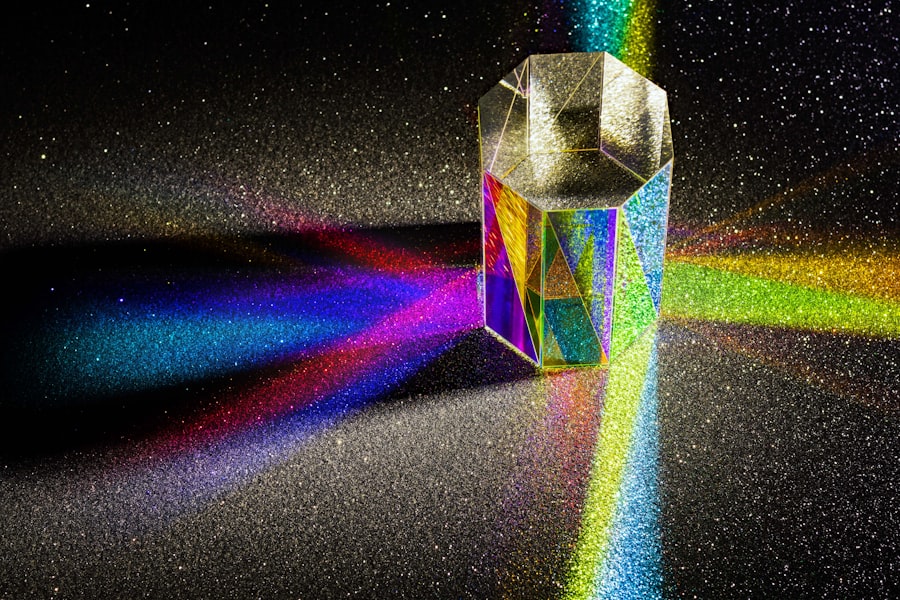
The nature of light and matter has long been a subject of scientific inquiry. Early experiments, like those by Thomas Young with his double-slit experiment, demonstrated that light behaves as a wave, creating interference patterns. However, later experiments, such as the photoelectric effect, revealed that light also behaves as a particle, with discrete packets of energy called photons. This inherent duality—the capacity to exhibit both wave-like and particle-like properties—is a cornerstone of quantum mechanics and applies not only to light but also to all matter.
The Double-Slit Experiment: A Quantum Riddle
The double-slit experiment is a classic illustration of wave-particle duality and the peculiar nature of quantum observation. When particles, such as electrons, are fired at a screen with two slits, they behave as waves and create an interference pattern on a detector behind the screen, a hallmark of wave behavior. However, if detectors are placed at the slits to determine which slit each electron passes through, the interference pattern disappears, and the electrons behave like individual particles, going through one slit or the other.
The Observer Effect: Shaping the Outcome
This outcome suggests that the very act of observation fundamentally alters the observed system. In the absence of measurement, the electron explores all possible paths as a wave. But when we try to pin down its trajectory, it is forced to assume a particle-like definite path. This is an example of the observer effect, where the observer’s knowledge or interaction with the system dictates the observed properties. The electrons, it seems, are shy and only reveal their wave nature when unobserved.
Complementarity Principle: A Unified Description
Niels Bohr’s principle of complementarity offers a way to reconcile wave-particle duality. It states that wave-like and particle-like descriptions are complementary aspects of the same quantum entity. Neither description alone is complete. Depending on the experimental setup, the entity will manifest either its wave nature or its particle nature, but not both simultaneously in the same experiment. This principle highlights the limitations of our classical intuition when trying to describe the quantum realm.
Quantum Tunneling: Passing Through Walls
Quantum tunneling is another paradoxical phenomenon where particles can pass through energy barriers that they classically would not have enough energy to overcome. Imagine rolling a ball towards a hill. If the ball doesn’t have enough kinetic energy, it will roll back down. However, in the quantum world, a particle can “tunnel” through the barrier, much like a ghost passing through a solid wall, and emerge on the other side.
The Uncertainty Principle: A Fundamental Limit
The feasibility of quantum tunneling is intrinsically linked to Heisenberg’s uncertainty principle. This principle states that certain pairs of physical properties, such as position and momentum, cannot be simultaneously known with perfect accuracy. There’s a fundamental fuzziness to quantum reality. This inherent uncertainty allows for temporary fluctuations in a particle’s energy, enabling it to momentarily “borrow” energy from the vacuum to overcome a barrier that would otherwise be insurmountable.
Implications in Nature and Technology
Quantum tunneling is not just a theoretical curiosity; it plays a crucial role in numerous natural phenomena and technological applications. It is essential for nuclear fusion within stars, enabling protons to overcome their electrostatic repulsion and fuse. In semiconductor devices like transistors, quantum tunneling is the mechanism behind their operation. Furthermore, scanning tunneling microscopes (STMs) utilize this phenomenon to image surfaces at the atomic level, allowing us to “see” individual atoms.
Fusion Reactions: The Sun’s Power Source
The sun’s energy is generated through nuclear fusion, a process that requires the nuclei of hydrogen atoms (protons) to overcome their mutual electrostatic repulsion. The temperatures and pressures within the sun’s core are immense, but not quite high enough to classically overcome this repulsive force for a significant number of protons. Quantum tunneling is the key that unlocks this process. Protons can tunnel through the Coulomb barrier, allowing them to get close enough for the strong nuclear force to bind them together, releasing vast amounts of energy.
Quantum reality paradoxes continue to intrigue scientists and philosophers alike, as they challenge our understanding of the nature of reality itself. A fascinating exploration of these concepts can be found in a related article that delves into the implications of quantum mechanics on our perception of existence. For those interested in expanding their knowledge on this topic, you can read more about it in this insightful piece on Freaky Science. The article provides a comprehensive overview of various paradoxes and their potential impact on the future of scientific inquiry.
The Measurement Problem: Who Is Watching the Watcher?
| Paradox Name | Description | Key Concept | Implications | Notable Experiment |
|---|---|---|---|---|
| Schrödinger’s Cat | A thought experiment illustrating superposition where a cat is simultaneously alive and dead until observed. | Quantum Superposition | Challenges classical notions of reality and measurement. | Quantum decoherence studies |
| Quantum Entanglement Paradox | Particles remain connected so that the state of one instantly influences the other, regardless of distance. | Non-locality | Questions locality and causality in physics. | Bell’s Inequality Tests |
| Wigner’s Friend | Explores the subjectivity of measurement and observation in quantum mechanics. | Observer Effect | Raises questions about objective reality and consciousness. | Proposed thought experiment; recent experimental analogs |
| Quantum Zeno Paradox | Frequent observation can seemingly freeze the evolution of a quantum system. | Measurement-induced state collapse | Impacts understanding of time evolution in quantum systems. | Repeated measurement experiments on unstable particles |
| Delayed Choice Experiment | Choice of measurement seems to retroactively affect the state of a particle. | Wave-particle duality and causality | Challenges classical cause-effect relationships. | Wheeler’s delayed choice experiment |
The persistent issue of the measurement problem in quantum mechanics centers on the transition from a probabilistic, superpositional quantum state to a definite, classical outcome upon measurement. While the mathematical formalism of quantum mechanics accurately predicts experimental results, it offers no definitive explanation for how or why this collapse occurs. This leaves a significant gap in our understanding of reality.
Interpretations of Quantum Mechanics: A Multifaceted View
Numerous interpretations of quantum mechanics have been proposed to address the measurement problem, each offering a different perspective on the nature of reality.
The Copenhagen Interpretation: The Dominant Paradigm
The Copenhagen interpretation, championed by Niels Bohr and Werner Heisenberg, posits that a quantum system exists in a superposition of states until it is measured by a macroscopic observer or apparatus. At that moment, the wavefunction collapses into one definite state. This is the most widely taught and accepted interpretation, but it leaves the nature of the “observer” and the “measurement” itself somewhat ambiguous. It’s like saying a secret is revealed only when someone whispers it, but without explaining who or what is doing the whispering.
Many-Worlds Interpretation: An Expanding Universe of Outcomes
The Many-Worlds Interpretation (MWI), proposed by Hugh Everett III, suggests that instead of collapsing upon measurement, the wavefunction splits. Every possible outcome of a quantum measurement occurs in a separate, parallel universe. In this view, there is no collapse, and all possibilities are realized concurrently. The observer simply finds themselves in one of these branches. This interpretation avoids the measurement problem but introduces the staggering implication of an uncountably vast multiverse.
Quantum Bayesianism (QBism): Subjective Probabilities
QBism, or Quantum Bayesianism, views quantum probabilities as subjective representations of an agent’s beliefs about the world. The act of measurement is seen as an update of these beliefs, rather than a physical process affecting the quantum state itself. This interpretation reframes quantum mechanics as a tool for prediction and decision-making, rather than a direct description of objective reality.
The Quest for a Unified Theory: Bridging the Gaps
The ongoing quest to unify quantum mechanics with general relativity, the theory of gravity, is one of the most significant challenges in modern physics. Such a unified theory, often referred to as a theory of quantum gravity, is expected to provide a deeper understanding of phenomena like black holes and the early universe, and potentially offer fresh insights into the measurement problem and the fundamental nature of reality. Understanding how gravity and quantum mechanics play together is like trying to understand how the ocean and the wind interact to create waves.
In conclusion, the exploration of quantum reality reveals a universe far stranger and more fascinating than our everyday experiences suggest. The paradoxes of superposition, entanglement, wave-particle duality, and quantum tunneling are not intellectual puzzles to be solved in isolation, but rather glimpses into the fundamental workings of existence. By grappling with these seemingly contradictory concepts, we refine our understanding of observation, probability, and causality, pushing the boundaries of human knowledge and paving the way for future technological marvels. The quantum realm, though alien, is ultimately the stage upon which all of reality, as we know it, unfolds.
FAQs
What is meant by “quantum reality paradoxes”?
Quantum reality paradoxes refer to the counterintuitive and often puzzling phenomena in quantum mechanics that challenge our classical understanding of reality. These paradoxes highlight situations where particles behave in ways that seem contradictory or defy common sense, such as being in multiple states simultaneously or affecting each other instantaneously over distance.
Can you give an example of a famous quantum reality paradox?
One well-known example is the Schrödinger’s cat paradox. It illustrates how a quantum system can exist in a superposition of states—both alive and dead—until it is observed. This thought experiment emphasizes the strange nature of measurement and reality in quantum mechanics.
How do quantum reality paradoxes impact our understanding of physics?
These paradoxes challenge classical notions of determinism, locality, and objective reality. They have led to the development of new interpretations of quantum mechanics and have deepened our understanding of the fundamental nature of the universe, influencing fields like quantum computing and quantum cryptography.
Are quantum reality paradoxes resolved or still debated?
Many quantum paradoxes remain topics of active research and philosophical debate. While some interpretations of quantum mechanics offer explanations, there is no universally accepted resolution. The paradoxes continue to inspire new theories and experiments aimed at better understanding quantum phenomena.
Do quantum reality paradoxes have practical applications?
Yes, the principles underlying quantum paradoxes have practical applications in emerging technologies. For example, quantum superposition and entanglement—central to many paradoxes—are harnessed in quantum computing, quantum encryption, and quantum teleportation, promising advancements in information processing and security.