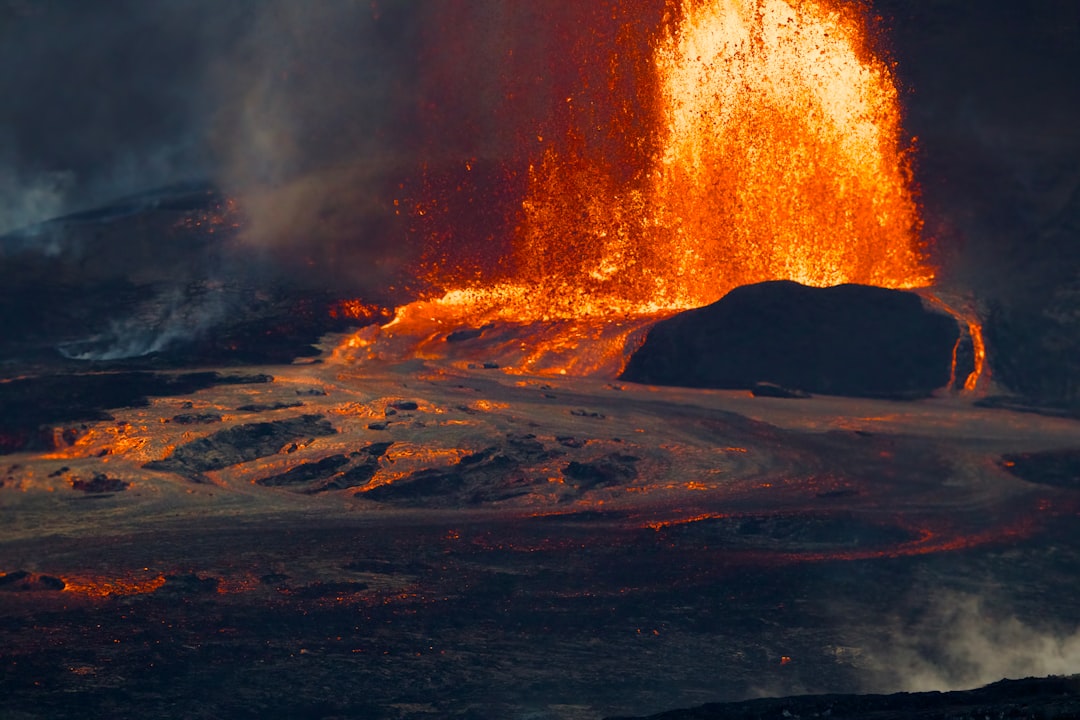
The Earth’s Magnetic Tapestry: A Chronicle in Stone
The Earth, a dynamic planet, possesses a powerful and ever-changing magnetic field. This invisible shield, generated by the convective motion of molten iron in its outer core, protects us from harmful solar radiation and plays a crucial role in navigation and geological processes. While undetectable to the naked eye, its ancient history is meticulously recorded within various geological materials. Among these, lava flows stand out as particularly robust archives, providing invaluable insights into geomagnetism, plate tectonics, and even paleoclimate over millions of years. The subfield of paleomagnetism, the study of Earth’s ancient magnetic field, leverages these geological records to unravel the planet’s intricate past.
The Physics of Paleomagnetic Recording
The ability of lava flows to preserve a snapshot of the Earth’s magnetic field stems from fundamental physical principles. As magma erupts onto the surface and begins to cool, certain magnetic minerals within the lava, primarily iron-titanium oxides like magnetite, undergo a phase transition. Above a specific temperature, known as the Curie temperature (which varies depending on the mineral composition), these minerals are paramagnetic, meaning they possess no permanent magnetic moment. However, as the lava cools below the Curie temperature, these minerals acquire a thermoremanent magnetization (TRM).
Curie Temperature and Mineral Properties
The Curie temperature is a critical threshold. For magnetite, a common magnetic mineral in basaltic lavas, this temperature is approximately 580°C. Above this point, the thermal energy of the atoms is sufficient to randomly orient the magnetic domains within the mineral, preventing a stable magnetic alignment. As cooling proceeds below the Curie temperature, the atomic moments within these domains align themselves with the direction of the ambient geomagnetic field present at that specific time and location. This alignment is effectively “locked in” as the lava solidifies, creating a permanent magnetic record. The strength of this remanence is proportional to the strength of the ambient field.
The Thermoremanent Magnetization Process
Imagine a miniature compass needle embedded within the molten rock. As the magma cools, this “needle” aligns itself with the prevailing Earth’s magnetic field. Once sufficient cooling has occurred, the rock becomes rigid, and the magnetic orientation of the minerals is effectively frozen in place, much like a photographic negative preserving an image. This TRM is remarkably stable and can persist for millions, even billions, of years, enduring subsequent geological events unless reheated above the Curie temperature. This resilience makes lava flows exceptional recorders of deep time.
Secondary Magnetizations and Overprints
While TRM is the primary target of paleomagnetic studies in lava flows, other forms of magnetization can also be present. Viscous remanent magnetization (VRM) can be acquired over long periods at ambient temperatures, representing a weaker, often secondary, magnetic signal. Chemical remanent magnetization (CRM) can form during chemical alteration of magnetic minerals. Paleomagnetists employ various laboratory techniques, such as stepwise thermal or alternating field demagnetization, to carefully isolate and remove these secondary magnetizations, allowing them to extract the primary TRM signal that accurately reflects the ancient geomagnetic field.
Deciphering Earth’s Ancient Compass: Key Discoveries
The systematic study of paleomagnetism in lava flows has revolutionized our understanding of Earth’s history, leading to several groundbreaking discoveries. The meticulous analysis of TRM in sequentially erupted lava flows has provided irrefutable evidence for phenomena that were once speculative.
Geomagnetic Reversals and Polarity Time Scales
Perhaps the most significant discovery attributed to paleomagnetic studies in lava flows is the phenomenon of geomagnetic reversals. For centuries, it was assumed that Earth’s magnetic field was consistently oriented in its present-day “normal” polarity, where the magnetic north pole is near the geographic north pole. However, studies of magnetized lava flows in the 1960s, notably those from the ocean floor, demonstrated that the Earth’s magnetic field has repeatedly flipped its polarity throughout geological history.
The Brunhes-Matuyama Reversal
The most recent major reversal, the Brunhes-Matuyama reversal, occurred approximately 780,000 years ago. Lava flows worldwide record this event, with younger flows showing normal polarity and older flows exhibiting reversed polarity. By studying sequences of lava flows with known radiometric ages, scientists have constructed detailed geomagnetic polarity time scales (GPTS), which serve as crucial chronological markers for geological events. These time scales are like a planet-wide barcode, each stripe representing a period of normal or reversed magnetism.
Apparent Polar Wander Paths (APWPs)
Before the widespread acceptance of plate tectonics, paleomagnetic data from lava flows provided strong evidence for continental drift. By measuring the paleomagnetic inclination and declination in ancient rocks on different continents, scientists observed that the magnetic poles appeared to wander over time, following different paths for different landmasses. These “apparent polar wander paths” (APWPs) were, in fact, not indicative of the geographic poles moving, but rather of the continents themselves shifting their positions relative to a relatively stationary magnetic pole.
Reconstructing Continental Drift
Imagine taking a series of photographs of a moving object, but the camera itself is also moving. The perceived movement of the object would be a combination of its own motion and the camera’s. Similarly, APWPs, when properly interpreted, provided a powerful tool for reconstructing the past movements of continents and were a cornerstone of the revolutionary theory of plate tectonics. By overlaying APWPs from different continents, scientists could determine when and how these landmasses were connected in the past.
Methodology: Extracting Secrets from Stone
Extracting meaningful paleomagnetic data from lava flows is a meticulous process involving both fieldwork and laboratory analysis. It requires careful sampling, precise measurement, and rigorous interpretation to ensure the integrity of the data.
Field Sampling Techniques
The process begins in the field with the selection of suitable lava flows. Scientists prioritize flows that are relatively unaltered by weathering or metamorphism, as these processes can disrupt the primary TRM signal. Once a suitable flow is identified, oriented core samples are collected using specialized drills. The orientation of each core (its cardinal direction and tilt) is precisely measured using a magnetic compass and an inclinometer before it is extracted. This orientation data is crucial for later converting laboratory measurements of remanence direction into geographical coordinates. Multiple samples are typically collected from a single flow to assess the consistency and reliability of the magnetization.
Laboratory Demagnetization and Measurement
Back in the laboratory, the core samples are subjected to a series of demagnetization steps. The goal of demagnetization is to progressively remove any secondary magnetizations (VRM, CRM) and isolate the primary TRM. This can be achieved through two primary methods:
Alternating Field (AF) Demagnetization
In AF demagnetization, samples are exposed to an alternating magnetic field that gradually increases in intensity and then slowly tapers off to zero. This process selectively demagnetizes magnetic domains with lower coercivity (resistance to demagnetization), which typically correspond to weaker, secondary magnetizations. The stable, higher coercivity TRM is thus revealed.
Thermal Demagnetization
Thermal demagnetization involves incrementally heating the samples to progressively higher temperatures, cooling them in a zero-field environment, and measuring their remanence. As the temperature crosses the Curie temperature of different magnetic minerals, their magnetization is progressively unblocked, allowing scientists to isolate the primary TRM, which typically has a higher blocking temperature range. By plotting the direction and intensity of magnetization against the demagnetization step, paleomagnetists can identify the characteristic remanent magnetization (ChRM) that represents the original TRM.
Data Analysis and Interpretation
Once the ChRM is isolated for numerous samples from a given lava flow, statistical methods are employed to determine the mean paleomagnetic direction for that flow. This mean direction, expressed as declination (deviation from true north) and inclination (angle with the horizontal), provides a record of the ancient geomagnetic field at the time of the lava’s eruption. Further analysis involves comparing these directions to expected geomagnetic field behaviour, constructing APWPs, and integrating with radiometric dating to build detailed GPTS. The fidelity of these records is often astounding, allowing for insights into even rapid changes in the Earth’s magnetic field, such as geomagnetic excursions.
Expanding Horizons: Beyond Basic Paleomagnetism
While fundamental paleomagnetic discoveries have reshaped our understanding of Earth, the field continues to evolve, using lava flows as a versatile data source for tackling more complex questions about our planet.
Paleointensity Studies: Measuring Ancient Field Strength
Beyond direction, paleomagnetists also strive to determine the strength of the ancient geomagnetic field, a discipline known as paleointensity. The intensity of Earth’s magnetic field has varied significantly over geological time, and these fluctuations can provide insights into the processes occurring within the Earth’s core. Lava flows are particularly valuable for paleointensity studies due to their acquisition of TRM, which is directly proportional to the ambient field strength.
The Thellier-Thellier Method
The most widely used method for paleointensity determination is the Thellier-Thellier method. This involves heating and cooling a sample through a series of steps, in the presence and absence of a known laboratory magnetic field. By comparing the acquired TRM in the known field to the natural remanent magnetization (NRM) of the sample, scientists can estimate the strength of the ancient field. However, paleointensity measurements are often more challenging than directional studies and require exceptionally well-preserved samples and careful experimental control.
Linking Paleomagnetism to Paleoclimate
Surprisingly, paleomagnetic records in lava flows can also offer supplementary information for understanding past climates. While not directly recording temperature or precipitation, the interplay between geomagnetic field changes, cosmic ray flux, and atmospheric processes suggests potential indirect links.
Magnetic Field and Cosmic Ray Flux
A weaker geomagnetic field offers less protection from cosmic rays, which can lead to increased ionization in the atmosphere and potentially influence cloud formation. Therefore, periods of low paleointensity might correlate with certain climatic shifts, though this is an active area of research with complex interactions. Lava flows, by providing a robust timeline of geomagnetic strength, can contribute to understanding these intricate connections, offering pieces of a larger puzzle that scientists are still assembling.
The Ever-Unfolding Story
Lava flows, seemingly inert and unchanging, are in fact silent storytellers, holding within their crystalline structure the indelible signature of Earth’s ancient magnetic field. From validating continental drift to charting the rhythmic reversals of the geomagnetic pole and even hinting at climatic reverberations, these fiery geological records have provided a crucial framework for understanding the Earth’s profound and dynamic history. As scientific techniques continue to advance, paleomagnetists will undoubtedly continue to unlock new secrets from these ancient geological archives, further enriching our comprehension of our planet’s past, present, and future.
SHOCKING: The Deep-Core “Blobs” Are Hacking Reality
FAQs
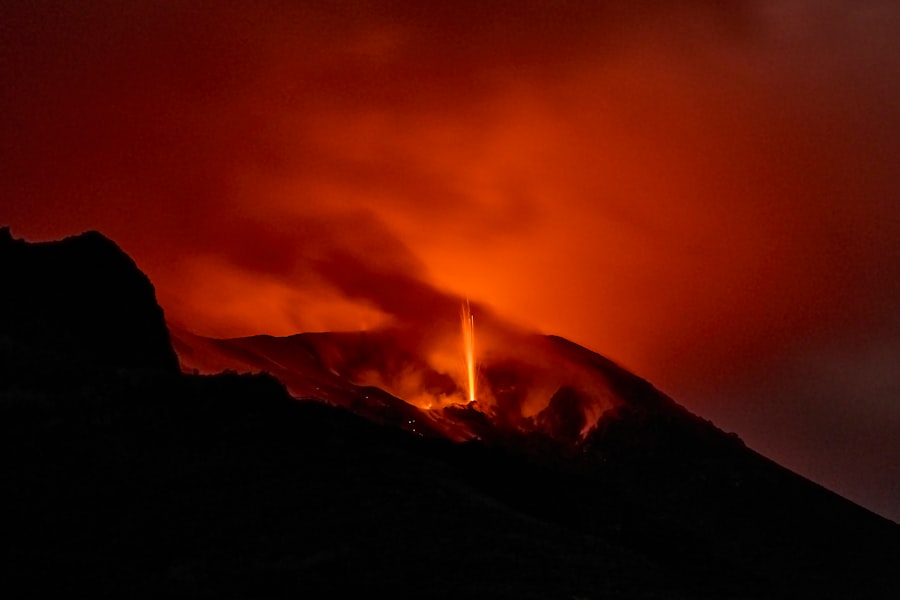
What are paleomagnetic records in lava flows?
Paleomagnetic records in lava flows refer to the natural remanent magnetization preserved in volcanic rocks. When lava cools and solidifies, magnetic minerals within the rock align with the Earth’s magnetic field at that time, effectively recording its direction and intensity.
How do scientists use paleomagnetic records from lava flows?
Scientists analyze the magnetic orientation and strength recorded in lava flows to study past changes in the Earth’s magnetic field, such as geomagnetic reversals, secular variation, and plate tectonic movements. These records help reconstruct the history of the Earth’s magnetic field and continental drift.
What information can be obtained from studying paleomagnetic records in lava flows?
Studying these records can provide data on the timing and duration of geomagnetic reversals, the latitude at which the lava erupted (paleolatitude), and insights into the movement of tectonic plates over geological time.
How are paleomagnetic samples collected from lava flows?
Samples are typically collected by drilling cylindrical cores from solidified lava flows in the field. These cores are then analyzed in laboratories using magnetometers to measure their magnetic properties and determine the ancient magnetic field direction and intensity.
What factors can affect the reliability of paleomagnetic records in lava flows?
Factors include chemical alteration of magnetic minerals, thermal overprinting from later heating events, mechanical disturbance, and weathering. Proper sampling techniques and laboratory analyses are essential to ensure accurate interpretation of the paleomagnetic data.