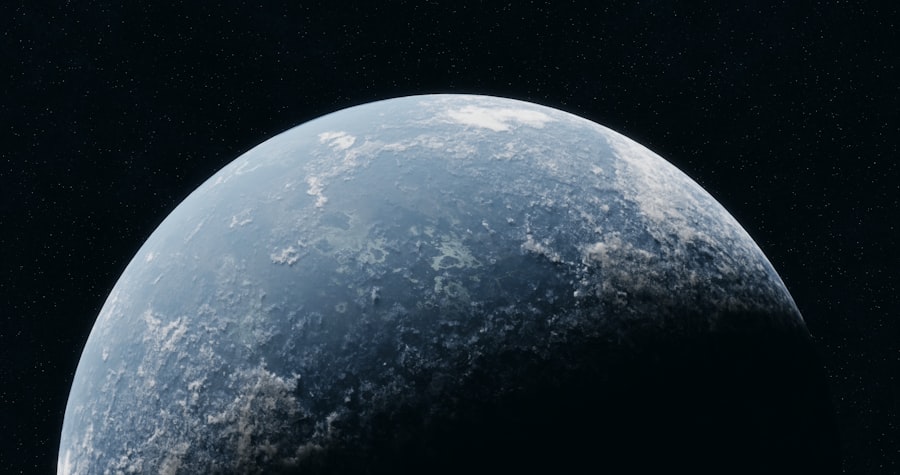
The Earth, our planet, is a celestial body in constant flux, a grand theater where immense forces sculpt its surface and drive its inner workings. Unlike a static painting, Earth is a living canvas, perpetually being re-imagined by the relentless energy churning within and the subtle embrace of cosmic forces. To truly understand our home is to acknowledge these dynamic forces, the architects of mountains, the sculptors of oceans, and the engine of life itself.
At the very heart of our planet lies an inferno, a molten core generating the heat that powers many of Earth’s most dramatic transformations. This internal heat, a primordial inheritance from the planet’s formation, is the fundamental driver of geological activity. It is the unseen engine, humming beneath our feet, responsible for a symphony of processes that shape continents and fuel volcanic eruptions.
The Core: A Fiery Crucible
The Earth’s core is divided into two distinct regions: the solid inner core, approximately the size of the Moon, and the liquid outer core, a churning sea of molten iron and nickel. The immense pressures at the center maintain the inner core’s solid state, despite temperatures estimated to be as hot as the surface of the Sun. This immense heat originates from two primary sources: residual heat from the planet’s accretion and radioactive decay of isotopes within the Earth’s mantle.
Inner Core: The Solid Heart
The solid inner core, despite being incredibly hot, is a stable entity. However, its presence influences the dynamics of the surrounding liquid outer core. It acts as an anchor, a point around which the convection currents of the outer core can organize.
Outer Core: The Dynamo’s Embrace
The liquid outer core is the site of a crucial phenomenon: the geodynamo. The slow rotation of the Earth, combined with convection currents within the molten metal, generates Earth’s magnetic field. This magnetic field, often visualized as invisible lines of force emanating from the poles, acts as a crucial shield, deflecting harmful solar wind and charged particles from space. Without this magnetic umbrella, life on Earth would be significantly more vulnerable to cosmic radiation.
Mantle Convection: The Slow Dance of Rock
Above the molten outer core lies the Earth’s mantle, a thick layer of silicate rock. While solid on short timescales, the mantle behaves as a highly viscous fluid over geological epochs. The heat from the core drives slow, massive convection currents within the mantle, akin to the circulation of water in a pot being heated from below. Hotter, less dense material rises, while cooler, denser material sinks. This colossal, geological treadmill is the primary force behind plate tectonics.
Asthenosphere: The Deformable Layer
The upper part of the mantle, known as the asthenosphere, is particularly important. This region is partially molten, allowing the rigid lithospheric plates that make up Earth’s crust to “float” and move upon it. The asthenosphere acts like a lubricant, facilitating the slow, inexorable drift of continents.
Plumes and Hotspots: Anomalies in the Flow
Occasionally, exceptionally hot plumes of material rise from deep within the mantle. When these plumes reach the underside of the lithosphere and breach the crust, they can create volcanic regions known as hotspots, independent of plate boundaries. The Hawaiian Islands, for example, are a classic example of hotspot volcanism, formed as the Pacific Plate has moved over a stationary mantle plume.
In exploring the fascinating world of earth science, one can gain deeper insights into the various elements that shape our planet. A related article that delves into these topics is available at Freaky Science, where readers can discover the intricate relationships between geological processes, atmospheric phenomena, and ecological systems. This resource offers valuable information for anyone interested in understanding the fundamental components of earth science and their impact on our environment.
The Sculpting Hand: Plate Tectonics
The movement of Earth’s crustal plates, a direct consequence of mantle convection, is perhaps the most visible manifestation of Earth’s dynamic forces. Plate tectonics is the grand narrative of continental drift, mountain building, and the creation of new ocean floor. It is the grand sculpture, constantly reshaping the planet’s surface.
Lithospheric Plates: The Earth’s Jigsaw Puzzles
Earth’s outermost layer, the lithosphere, is broken into numerous large and small plates. These plates, composed of both oceanic and continental crust, are not fixed but are instead in perpetual motion, gliding over the semi-fluid asthenosphere. Their interactions at their boundaries are the source of most seismic and volcanic activity.
Plate Boundaries: Where Continents Collide and Separate
The edges of these plates are where the real drama unfolds. These boundaries are classified into three main types, each with its distinct geological signature.
Divergent Boundaries: Birth of New Crust
At divergent boundaries, plates are pulling apart. As they separate, magma from the mantle rises to fill the gap, solidifying to create new oceanic crust. This process is ongoing along the Mid-Atlantic Ridge, where the North American and Eurasian plates are slowly drifting away from each other. Here, new seafloor is continuously generated, pushing continents apart like a slow, inexorable embrace.
Convergent Boundaries: Mountains and Trenches Form
When plates collide, the outcomes vary depending on the types of crust involved.
Oceanic-Continental Convergence: Subduction Zones
Where an oceanic plate collides with a continental plate, the denser oceanic plate is forced beneath the lighter continental plate in a process called subduction. This dramatic event creates deep ocean trenches and fuels volcanic mountain ranges along the continental margin, as the subducting plate melts and rises as magma. The Andes Mountains are a prime example of this type of convergent boundary.
Oceanic-Oceanic Convergence: Island Arcs
When two oceanic plates converge, one is typically subducted beneath the other. This process leads to the formation of volcanic island arcs, chains of volcanic islands that rise from the ocean floor. The Mariana Islands, home to the deepest oceanic trench on Earth, are formed by such a convergence.
Continental-Continental Convergence: The Rise of Giants
When two continental plates collide, neither is easily subducted due to their low density. Instead, the crust buckles, folds, and faults, leading to the formation of massive mountain ranges. The Himalayas, the world’s tallest mountain range, are a testament to this powerful collision between the Indian and Eurasian plates. These forces, acting over millions of years, have hoisted rock to unimaginable heights.
Transform Boundaries: Sideways Sliding
At transform boundaries, plates slide past each other horizontally. While they do not create or destroy crust, these boundaries are characterized by significant friction, which can lead to powerful earthquakes. The San Andreas Fault in California, where the Pacific Plate and the North American Plate grind past each other, is a well-known example of a transform boundary.
The Fury of the Earth: Earthquakes and Volcanoes
The immense pressures and stresses generated by plate tectonics are periodically released through earthquakes and volcanic eruptions, dramatic expressions of Earth’s stored energy. These events, while often destructive, are also integral to the planet’s geological cycle, shaping landscapes and redistributing materials.
Earthquakes: The Shudder of the Crust
Earthquakes are the sudden release of energy stored within the Earth’s crust. This energy builds up as tectonic plates grind against each other. When the stress exceeds the strength of the rocks, they fracture, sending seismic waves rippling through the Earth.
Seismic Waves: Rings of Energy
These waves, categorized as P-waves (primary) and S-waves (secondary), travel through the Earth’s interior, causing the ground to shake. Surface waves, which travel along the Earth’s surface, are responsible for much of the damage associated with earthquakes. The study of these waves, seismology, provides invaluable information about Earth’s interior structure.
Faults: The Lines of Fracture
Earthquakes occur along faults, which are fractures in the Earth’s crust where movement has taken place. The type of faulting—normal, reverse, or strike-slip—depends on the type of tectonic stress at play.
Volcanoes: The Earth’s Fiery Breath
Volcanoes are openings in the Earth’s crust through which molten rock, ash, and gases erupt. They are often found at plate boundaries, but can also occur at hotspots. Volcanic activity is a direct consequence of the Earth’s internal heat and the movement of tectonic plates.
Magma and Lava: Molten Rock’s Journey
Magma, molten rock beneath the Earth’s surface, rises due to its lower density compared to surrounding solid rock. When magma erupts onto the surface, it is called lava. The composition and viscosity of magma determine the type of volcanic eruption, from effusive flows to explosive outbursts.
Types of Volcanoes: Diverse and Destructive
Volcanoes come in various forms, each reflecting the nature of their eruptions. Shield volcanoes, like those in Hawaii, are built up by repeated effusive eruptions of fluid lava, creating broad, gently sloping cones. Stratovolcanoes, or composite volcanoes, such as Mount Fuji, are characterized by steep slopes and are formed by alternating layers of lava flows and pyroclastic material, often resulting in explosive eruptions. Cinder cones are smaller, steep-sided volcanoes built from ejected volcanic fragments.
The Sculptor of Surfaces: Erosion and Weathering

While internal forces build mountains, external forces, primarily driven by the Sun’s energy, relentlessly break them down. Erosion and weathering, the constant work of wind, water, and ice, are the sculpting hands that shape Earth’s landscapes, smoothing rough edges and transporting material over vast distances from the highest peaks to the deepest ocean floor.
Weathering: The Slow Disintegration
Weathering is the process by which rocks are broken down into smaller pieces. It can be physical or chemical.
Physical Weathering: Mechanical Breakdown
Physical weathering breaks down rocks without changing their chemical composition. Processes like freeze-thaw action, where water seeps into cracks, freezes, expands, and widens the cracks, are prime examples. Abrasion, the grinding down of rocks by wind-blown sand or sediment, also contributes to physical weathering.
Chemical Weathering: Transformation of Minerals
Chemical weathering involves chemical reactions that alter the minerals within rocks. The most common form is dissolution, where water, especially rainwater which is slightly acidic due to dissolved carbon dioxide, dissolves soluble minerals. Oxidation, the reaction of minerals with oxygen, can lead to the rusting of iron-containing rocks.
Erosion: The Movement of Debris
Erosion is the transport of weathered material. Gravity plays a key role, but other agents are equally significant.
Water Erosion: Rivers and Raindrops
Water is a powerful erosional force. Rivers carve valleys, transport vast amounts of sediment, and deposit it elsewhere, creating deltas and floodplains. Rainfall can also cause significant erosion, particularly on exposed slopes. The Grand Canyon is a spectacular testament to the erosive power of water over millennia.
Wind Erosion: The Desert’s Sculptor
In arid and semi-arid regions, wind is a significant erosional agent. It picks up and transports sand and dust, shaping sand dunes and eroding exposed rock formations. Ventifacts, rocks shaped by wind-blown sand, are common in desert environments.
Glacial Erosion: The Ice Age Sculptors
Glaciers, massive bodies of ice, exert immense erosional power. As they move, they grind down bedrock, transport enormous quantities of sediment, and carve out U-shaped valleys, fjords, and cirques. The landscapes of many mountainous regions, like the Alps and the Rockies, bear the unmistakable imprint of past glaciation.
Mass Wasting: Gravity’s Relentless Pull
Mass wasting, or landslides, is the downslope movement of rock and soil under the influence of gravity. It can occur slowly as creep or rapidly as rockfalls and debris flows, often triggered by heavy rainfall or earthquakes.
Earth science encompasses a wide range of topics, including geology, meteorology, and oceanography, all of which help us understand our planet’s processes and systems. For those interested in exploring more about the fascinating interactions between the Earth’s elements, a related article can be found at Freaky Science, where various scientific phenomena are discussed in an engaging manner. This resource provides insights into how these elements shape our environment and influence life on Earth.
The Life-Giver’s Breath: The Water Cycle and Climate Systems
| Element | Description | Common Metrics | Units |
|---|---|---|---|
| Atmosphere | Layer of gases surrounding Earth | Air Pressure, Temperature, Humidity | hPa, °C, % |
| Hydrosphere | All water on Earth including oceans, rivers, lakes | Salinity, Water Temperature, pH | PSU, °C, pH units |
| Geosphere | Solid Earth including rocks, minerals, and landforms | Rock Density, Seismic Velocity, Mineral Composition | g/cm³, km/s, % composition |
| Biosphere | All living organisms on Earth | Biomass, Species Diversity, Primary Productivity | kg/m², species count, gC/m²/day |
| Cryosphere | Frozen water parts of Earth including glaciers and ice caps | Ice Thickness, Snow Cover Area, Albedo | m, km², dimensionless |
While not as dramatic as seismic events or volcanic eruptions, the continuous circulation of water and the intricate interactions of Earth’s climate systems are fundamental dynamic forces that sustain life and shape global environments. This cycle, powered by solar energy, is a constant redistribution of a vital resource, influencing everything from the formation of clouds to the erosion of landscapes.
The Hydrologic Cycle: A Never-Ending Journey
The water cycle, or hydrologic cycle, describes the continuous movement of water on, above, and below the surface of the Earth. It is a closed system, meaning the total amount of water remains relatively constant, but its form and location are constantly changing.
Evaporation and Transpiration: Water’s Ascent
Solar energy drives evaporation, the process by which liquid water turns into water vapor and rises into the atmosphere. Plants also release water vapor into the atmosphere through transpiration, a process that contributes significantly to atmospheric moisture. Together, these processes are the primary means by which water enters the atmosphere.
Condensation and Precipitation: The Return Journey
As water vapor rises and cools, it condenses into tiny water droplets or ice crystals, forming clouds. When these droplets or crystals become heavy enough, they fall back to Earth as precipitation in the form of rain, snow, sleet, or hail.
Collection and Runoff: The Ground’s Embrace
Precipitation that falls on land can follow several paths. Some infiltrates into the ground, replenishing groundwater reserves. Some flows over the surface as runoff, eventually making its way to rivers, lakes, and oceans. This runoff is a major driver of erosion and sediment transport.
Climate Systems: A Global Interplay
Earth’s climate systems are a complex web of interactions between the atmosphere, oceans, land surface, ice, and living organisms. These systems are not static but are constantly changing, influenced by various dynamic forces.
Atmospheric Circulation: Winds of Change
The uneven heating of Earth’s surface by the Sun drives global atmospheric circulation. Differences in temperature and pressure create wind patterns that transport heat and moisture around the globe, influencing weather and climate patterns.
Oceanic Currents: The Planet’s Conveyor Belt
Ocean currents, both surface and deep-sea, play a crucial role in regulating global climate. They distribute heat from the tropics towards the poles and influence rainfall patterns. The thermohaline circulation, a global conveyor belt powered by differences in temperature and salinity, is a particularly important element of this system.
Feedback Loops: Amplifying or Dampening Change
Climate systems are characterized by feedback loops, where a change in one component can trigger a cascade of effects. Positive feedback loops amplify an initial change, while negative feedback loops dampen it. For example, as ice melts due to warming temperatures, less sunlight is reflected back into space, leading to further warming (a positive feedback loop).
The dynamic forces that shape our planet are a testament to the constant activity and interconnectedness of Earth’s systems. From the molten heart to the icy poles, from the deepest trenches to the highest mountains, a ceaseless interplay of energy and matter is at work, crafting the world we inhabit. Understanding these forces is not merely an academic pursuit but a fundamental step towards appreciating the resilience and ever-evolving nature of our dynamic planet.
FAQs
What are the main branches of Earth science?
Earth science primarily includes geology, meteorology, oceanography, and astronomy. These branches study the Earth’s structure, atmosphere, oceans, and its place in the universe, respectively.
What is the importance of studying Earth science?
Studying Earth science helps us understand natural processes, predict natural disasters, manage natural resources, and address environmental challenges such as climate change.
What are the key elements studied in Earth science?
Key elements include the Earth’s materials (rocks, minerals, soil), processes (volcanic activity, erosion, weather patterns), and systems (atmosphere, hydrosphere, lithosphere, biosphere).
How does Earth science contribute to environmental protection?
Earth science provides critical data on pollution, climate change, and natural resource management, enabling informed decisions to protect ecosystems and promote sustainable development.
What tools and methods are used in Earth science research?
Earth scientists use tools like satellites, seismographs, weather stations, and computer models to collect data and analyze Earth’s physical characteristics and processes.